Team Slogan Ideas: 100 Original Lines for Any Team
Use these team slogan ideas as a starting point for a workplace group, sports team, school club, volunteer crew, or project squad. The guide also shows how to choose a line people can actually say and use.

The quick answer: what makes team slogan ideas useful?
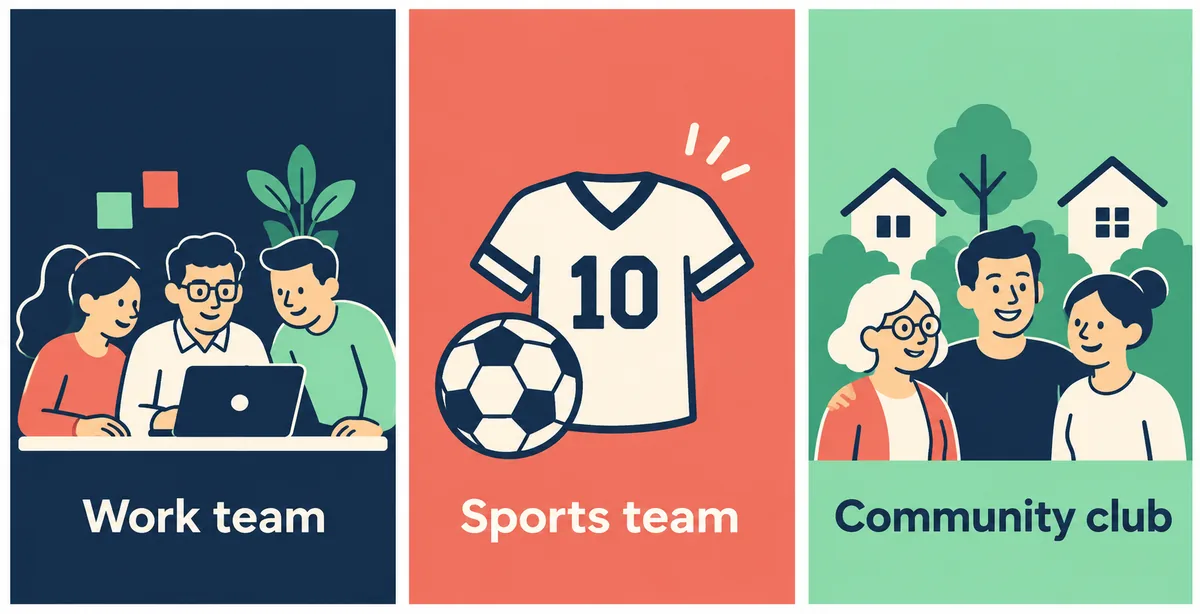
The best team slogan ideas give a group a short, repeatable way to name its goal or attitude. A workplace team may need a line about dependable collaboration, while a sports team may need energy and focus. A community club may want warmth and belonging. The words should fit the people and the moment instead of sounding like a generic corporate poster.
Start with the team, the situation, and the behavior you want to reinforce. Ask whether the line will be spoken in a huddle, printed on a shirt, added to a project page, or used in a kickoff. That context determines length, rhythm, humor, and how specific the promise can be. A line that works for a tournament may feel strange in a client meeting, and a clever office phrase may not survive a loud stadium.
The examples on this page are original teaching lines, not famous quotations. Use them to notice patterns such as shared verbs, contrast, rhythm, and a clear finish. Rewrite the promising directions with the real team name, goal, and boundaries, then test them with the people who will have to say the line.
How to turn team slogan ideas into a line people use
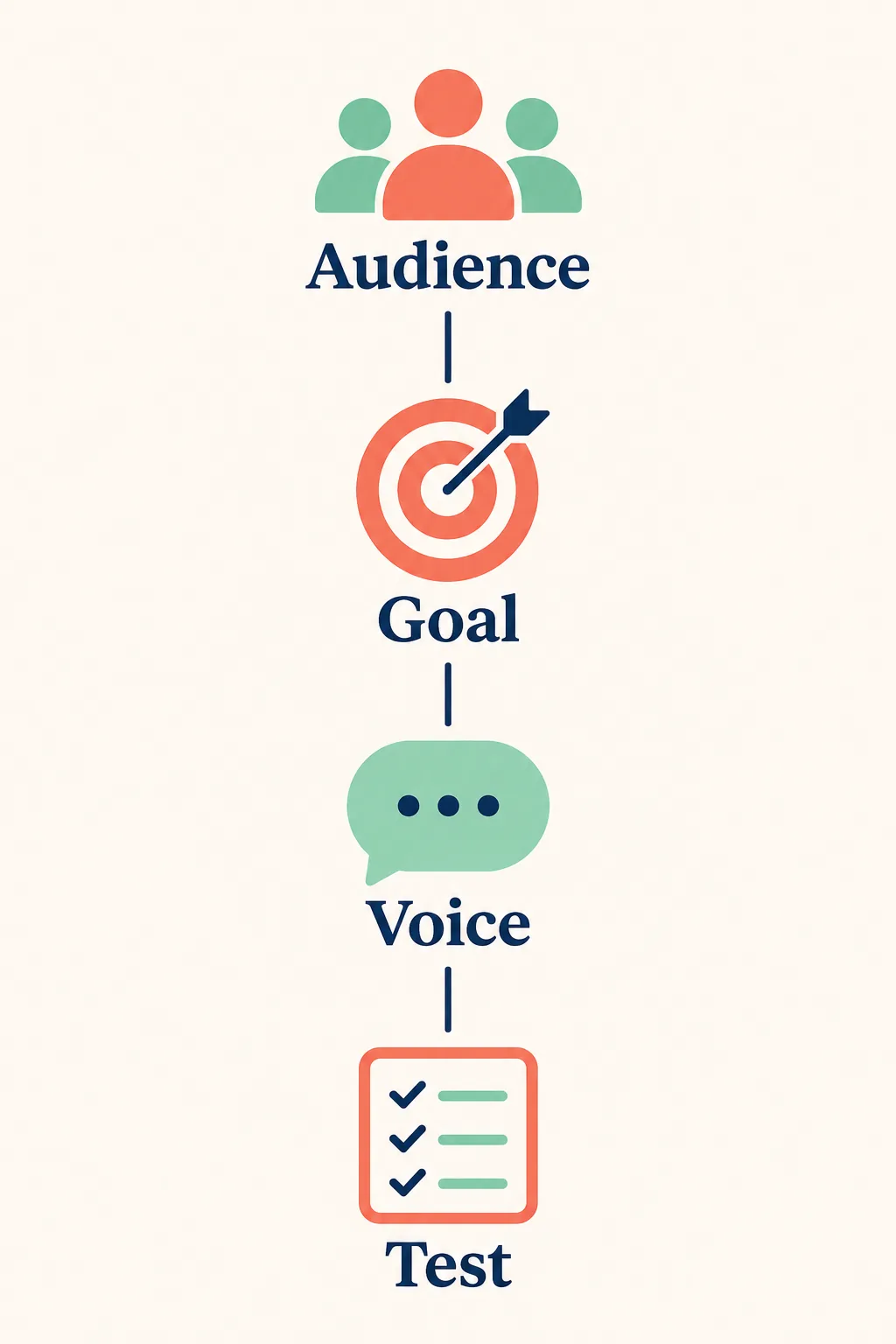
A four-part brief keeps brainstorming grounded. Complete each part before asking for dozens of variations.
Name the audience
Write down who the team is and who will hear the slogan. A product squad, youth sports team, and neighborhood committee have different vocabulary, authority, and inside references. Choose words that the group can recognize without a long explanation.
Choose one goal
Pick the result the line should support: trust, effort, safety, creativity, welcome, or a specific season. One strong goal is easier to remember than a sentence that promises excellence, speed, kindness, innovation, and victory at once.
Set the voice
Decide whether the line should sound calm, bold, playful, proud, or practical. Rhythm and rhyme can help a chant, while a work team may prefer a line that sounds credible in an email or client presentation.
Test the line
Say it at normal volume, read it at small size, and ask two people to repeat it after a short pause. Remove a word if the rhythm trips, the meaning is vague, or the line only works when the writer explains the joke.
Match the slogan to the team setting
Use the setting as a filter. It tells you what kind of promise feels believable and where the line will appear.
| Setting | Useful job | Voice to try | Test before publishing |
|---|---|---|---|
| Work team | Focus a project, service habit, or shared standard | Clear, capable, lightly human | Read it beside a project title and in a client-facing sentence |
| Sports team | Build energy, focus, and belonging before competition | Short, active, easy to chant | Say it during a huddle and check that every player can join in |
| School club | Welcome members and give the activity a shared identity | Bright, inclusive, memorable | Ask a new member what the line means without extra context |
| Volunteer crew | Connect a practical task to a visible community benefit | Warm, direct, hopeful | Check that the wording respects the people being served |
| Project squad | Keep a temporary cross-functional group aligned | Specific, energetic, time-aware | Make sure it still works when the project hits a difficult week |
| Online community | Set a tone for participation and moderation | Friendly, concise, welcoming | Review it for ambiguity, exclusion, and unintended double meanings |
Team slogan ideas by use case
These original examples show how a clear team job changes the wording. Adapt the direction, not the exact line, so the result belongs to your group.
| Use case | Original line | Why it works | Where to try it |
|---|---|---|---|
| Project team | Make progress visible | It gives a busy group a concrete behavior instead of a vague promise to be the best. | Sprint kickoff, project board, weekly review |
| Customer support | Solve it together, leave it clearer | The line joins teamwork with the customer outcome the team can control. | Team huddle, service playbook, training room |
| Sports team | Fast feet, one focus | Two short beats are easy to say and connect movement with shared attention. | Warm-up, bench, team shirt |
| School club | Curious minds, open doors | It welcomes beginners while keeping curiosity at the center of the club. | Recruitment poster, first meeting, club page |
| Volunteer group | Small hands, lasting change | The contrast makes a modest action feel meaningful without promising a miracle. | Event sign, volunteer briefing, social post |
| Creative crew | Many drafts, one brave idea | It normalizes iteration and points to the decision the group must make together. | Studio wall, critique meeting, launch checklist |
| Safety team | Watch out for one another | The direct verb makes care a shared habit rather than a slogan about perfection. | Shift start, equipment area, safety card |
| Community club | Bring your voice, build our place | The line balances individual participation with a shared local result. | Welcome table, newsletter, neighborhood event |
How to choose one line from a long list
Create a shortlist of five, then judge each line against the same brief. Do not let the loudest or funniest option win by default. A team slogan is a small piece of group culture: people will repeat it when work is hard, when a new member arrives, and when an outsider asks what the team stands for. The line should make those moments easier, not more awkward.
Put the shortlist in the real places where it will live. Read it on a phone, print it in one color, say it at a normal speaking pace, and imagine a manager, coach, teacher, or volunteer leader introducing it. If a phrase needs an explanation every time, replace the abstract word with a concrete action or image. If it sounds like a promise the team cannot keep, narrow the claim.
Finish with a context and clearance check. Search the exact phrase, review local associations, and ask the group whether any word feels exclusive or forced. An AI slogan generator can create variations quickly, but the team still owns the judgment about accuracy, culture, and whether the line is available for public use.
- Shared meaning: Can a new member explain the line after one quick read?
- Specific goal: Does it point to one behavior, value, or moment?
- Sayability: Can the group speak it without stumbling or shortening it?
- Placement: Does it fit a shirt, slide, poster, message, and small mobile screen?
- Belonging: Does the wording invite the whole team rather than spotlight one role?
- Proof: Is the promise visible in the way the team actually works?
- Clearance: Have you searched the exact phrase before using it publicly?
Common mistakes when writing team slogans
Most weak team mottos fail because the brief is too broad or the wording is difficult to use. Watch for these traps.
- Stacking every value into one line: excellence, speed, innovation, trust, fun, and victory become a blur.
- Using a famous quote or a competitor's slogan because it already sounds polished. Write an original direction instead.
- Choosing a private joke that excludes new members or makes sense only to the person who suggested it.
- Making the line so long that it becomes a mission statement rather than a repeatable team cue.
- Relying on rhyme while ignoring whether the words describe the team's real goal or behavior.
- Translating a slogan literally for another market without checking humor, idioms, or unwanted associations.
- Letting a generator decide the team's identity. Use generated options for breadth, then let people choose with a clear brief.
Team Slogan Ideas FAQ
What is a good team slogan?
A good team slogan is short enough to repeat, specific enough to mean something, and believable for the group using it. Start with one goal or behavior, then test the line aloud with real team members.
How do I create a team slogan?
Name the audience, choose one goal, set a voice, draft several directions, and test the shortlist in the places where the slogan will appear. Replace vague claims with concrete actions and check the exact phrase before publishing.
What are some team building slogan ideas?
Try directions about shared effort, such as ‘Make progress visible,’ ‘Small hands, lasting change,’ or ‘Many drafts, one brave idea.’ Adapt the wording to your team's real task instead of copying a generic list.
Should a sports team slogan rhyme?
Rhyme can make a sports slogan easy to chant, but it is optional. A strong active verb, a clear image, and a rhythm that fits a huddle matter more than forcing a rhyme that changes the meaning.
How long should a team motto be?
There is no fixed word count, but a line that can be spoken in one breath is easier to remember. Remove setup words and repeated ideas, then check that the shortened version still names the intended goal.
Can I use an AI slogan generator for team ideas?
Yes. Give the generator the team setting, audience, goal, tone, and words to avoid. Treat the output as a draft list, then let the team review meaning, inclusivity, sayability, originality, and trademark risk.
Can one slogan work for a work team and a sports team?
Sometimes, but the same line may feel too formal in a huddle or too playful in a client meeting. Compare the setting, intended behavior, and placement before reusing a phrase across groups.