Campaign Slogans: Ideas, Examples, and Writing Tips
Build a short campaign line around a real audience, a clear promise, and one action people can remember. This guide covers marketing, nonprofit, school, community, and neutral civic campaign contexts.

What makes campaign slogans effective?
Effective campaign slogans compress one useful idea into a line people can repeat, recognize, and connect with the campaign. The line should make the audience or cause clear, suggest a benefit or belief, and fit the place where it will appear: a poster, landing page, classroom sign, email subject line, social post, or event banner.
Start with the campaign goal rather than a rhyme. Write down who the campaign needs to reach, what should change for that audience, and what action the line should encourage. Then draft several versions in different voices: direct, optimistic, energetic, and distinctive. A campaign slogan generator can help you explore directions, but human review is still needed for accuracy, tone, and context.
The examples on this page are original drafting examples, not official statements from real candidates, organizations, or brands. They are meant to show structure and decision-making so you can create a line that belongs to your own campaign.
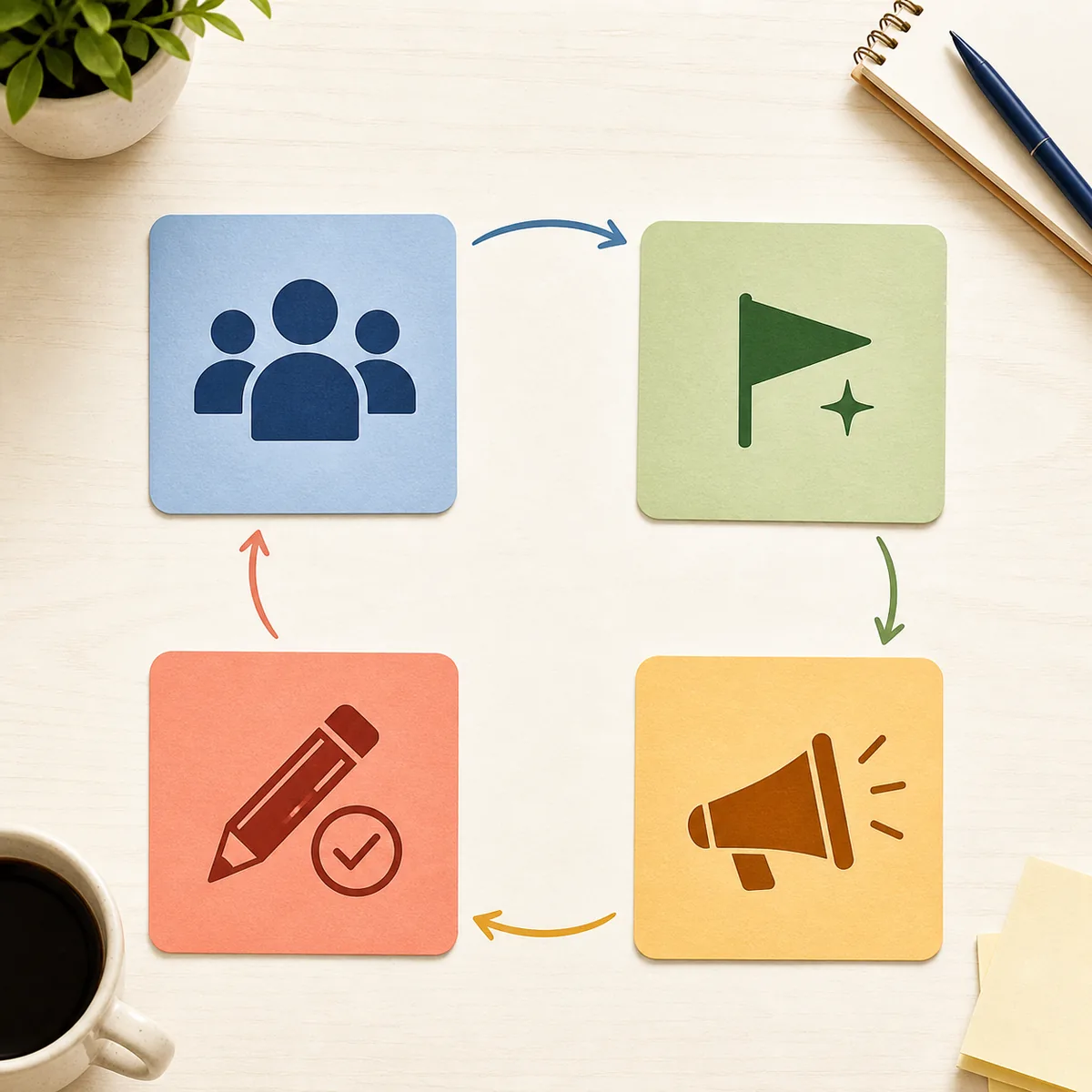
The four-part campaign slogan framework
Before writing campaign slogans, connect four pieces. If one is missing, the final line may sound polished but fail to guide the reader.
Name the people you need to move
A line for first-time customers should not sound like a line for volunteers, students, donors, or existing members. Write the audience in plain language before you choose a tone.
Choose one change to spotlight
A campaign can have many benefits, but a slogan usually carries one. Pick the clearest improvement, value, or belief instead of listing every feature.
Make the next step easy to imagine
The slogan does not need to be a complete call to action, but it should make the intended movement visible: join, try, vote, learn, donate, switch, attend, or share.
Check the line in its real setting
Read it beside the logo, headline, image, or event details. A line that works on a phone screen may be too vague on a sign, while a punchy poster line may be too abrupt for a landing page.
Campaign slogan ideas by goal
Use these original examples as starting points. Keep the structure that fits your goal, then replace the words with a real audience insight or campaign promise.
| Campaign goal | Starter idea | Why it works | Adapt it with |
|---|---|---|---|
| Product launch | Meet the Better Everyday | It turns a launch into a simple improvement people can picture. | Specific benefit + daily moment |
| Local business | Closer Service, Brighter Days | The contrast pairs a practical promise with a human result. | Service difference + emotional payoff |
| Nonprofit awareness | Small Steps, Shared Future | It gives individual participation a collective meaning without overpromising. | Action + community outcome |
| School campaign | Bring Ideas Into Action | The verb is clear and the line leaves room for many student priorities. | Audience voice + visible action |
| Community event | Make Room for More | The open-ended phrase can support inclusion, attendance, or participation. | Invitation + shared value |
| Sustainability campaign | Choose the Next Good Habit | It makes a broad value concrete and repeatable. | Choice + practical behavior |
| Digital campaign | Find the Signal, Skip the Noise | The contrast gives the audience a clear reason to pay attention. | Problem removed + useful result |
| Neutral civic campaign | Listen First, Move Together | It emphasizes a process and shared participation without endorsing a person or party. | Value + collective direction |
Five formulas for writing campaign slogans
A formula helps you draft quickly, but it should never become a finished line without editing. Try each frame with the same campaign promise and compare the tone.
Action plus outcome
Pair a simple verb with the change the campaign wants to create. This is useful when people need to understand the next step immediately.
Example: Start Local, Grow Stronger
Before and after
Show the tension between an unwanted current state and a better future. Keep the contrast specific enough to avoid generic inspiration.
Example: Less Waiting, More Doing
Audience plus promise
Speak directly to the people the campaign serves and name the benefit they can expect. This works well for services and community programs.
Example: For Curious Neighbors, Built to Share
Value plus memorable sound
Use alliteration, rhythm, or a soft rhyme only after the message is clear. Sound should make the promise easier to remember, not hide it.
Example: Plan Smart, Start Strong
Belief plus invitation
State a shared belief, then leave room for the audience to participate. This is useful for mission-led, educational, and community campaigns.
Example: Better Questions, Wider Possibilities
Campaign slogan examples to adapt
These examples show how the same writing decision changes with the channel. Replace the abstract nouns with a benefit your campaign can actually support.
| Use case | Example slogan | Best placement | Editing note |
|---|---|---|---|
| Email sign-up | Get the Short Version | Landing page or newsletter | A clear benefit works better than a vague promise of transformation. |
| Volunteer drive | Your Hour Can Open a Door | Recruitment page or event card | A concrete contribution makes participation feel possible. |
| Small business week | Shop Nearby, Know Your Neighbors | Window sign or local social post | The line connects the action to a local relationship. |
| Student election | More Voices, Better Classrooms | Student poster or speech slide | It keeps the focus on participation and an understandable result. |
| Public workshop | Learn It Together | Event page or registration card | Short wording supports a collaborative tone without explaining everything. |
| Cause campaign | Make Care Visible | Social graphic or campaign page | The phrase is memorable, but the surrounding copy must define the action. |
| New service | A Clearer Way Forward | Homepage hero or paid ad | The line creates direction; the subheading must explain the actual service. |
| Community cleanup | One Block, Many Hands | Poster, flyer, or volunteer email | A small unit of action makes the campaign easier to join. |
How to choose the best campaign slogan
Do not choose the first line that sounds catchy. Put your shortlist beside the campaign brief and ask whether a new reader could identify the audience, promise, and intended action without a long explanation. If the answer is no, the line may be a decorative tagline rather than a useful campaign slogan.
Next, test the same line in at least three placements. Read it as a poster headline, a mobile landing-page heading, and a spoken sentence. Look for words that disappear at small sizes, claims that need proof, or a tone that feels too playful for a serious setting. A strong line should survive the change of channel without losing its core meaning.
Finally, run a language and context check. Campaign slogans travel quickly across screenshots and translations, so look for unintended meanings, confusing abbreviations, and phrases that could be read as a promise the campaign cannot keep. Keep the final line short, then let the supporting copy carry the detail.
- Message: Can a reader explain what the campaign is about after one quick glance?
- Audience: Does the line sound like it was written for the people you need to reach?
- Action: Is the next step clear from the headline and nearby copy?
- Proof: Can the campaign support the promise with a real offer, plan, or behavior?
- Channel: Does the line work on a phone, poster, slide, email, and spoken introduction?
- Language: Have you checked translation, cultural context, and unintended interpretations?
Common campaign slogan mistakes
Most weak campaign slogans do not fail because they lack creativity. They fail because the line is trying to solve too many communication problems at once.
- Packing the audience, offer, date, location, and every benefit into one sentence. Put the extra detail in the headline, subheading, or campaign page.
- Using vague words such as better, future, solutions, or excellence without showing what changes for the audience.
- Choosing a political-sounding promise when the campaign is actually about a product, school event, nonprofit action, or local service. Match the voice to the real context.
- Copying a familiar brand or public slogan pattern so closely that the line feels borrowed or creates trademark and reputation risk.
- Writing a line that reads well but cannot be spoken naturally. Say it aloud and remove forced rhyme, filler, and awkward word order.
- Treating an AI-generated suggestion as final copy. Use a slogan generator for breadth, then edit for truth, audience fit, originality, and channel clarity.
Campaign slogan FAQ
What is a campaign slogan?
A campaign slogan is a short, repeatable line that helps a marketing, nonprofit, school, community, or civic campaign communicate its main message. It supports the campaign rather than replacing the full explanation, offer, or plan.
How do I write a campaign slogan?
Start with the audience, the change you want to create, and the action you want people to take. Draft several versions using direct, contrast, audience-plus-promise, sound-pattern, and belief-plus-invitation formulas. Test the strongest lines in the real channels before choosing one.
Should a campaign slogan include a call to action?
It can, but it does not have to be a complete instruction. A slogan should make the campaign direction visible; the nearby button, subheading, event details, or sign-up copy can provide the exact action and timing.
Can I use a campaign slogan generator?
Yes. A generator is useful for producing varied starting points, especially when you provide a detailed audience, goal, tone, and channel. Review every suggestion for accuracy, originality, cultural fit, and any claim that needs evidence before publishing.
What makes a campaign slogan memorable?
Specific meaning comes first. Once the audience can understand the promise, rhythm, alliteration, contrast, and a short word pattern can make the line easier to repeat. Clever sound without a clear message is usually less useful than a plain line with a real benefit.
How long should a campaign slogan be?
There is no fixed word count, but a short line is easier to say, display, and remember. Draft concise options first, then test them beside the campaign name and supporting copy. If the slogan needs a paragraph to explain, simplify the promise or move detail into the page copy.