Slogan Examples: Catchy Ideas, Formulas, and Why They Work
Use this guide to compare slogan examples, understand the pattern behind each line, and turn a rough brand promise into a clearer tagline.
Start with examples, then write your own line
Good slogan examples are useful because they show the job a short line must do: identify the offer, make the benefit easy to remember, and match the tone of the brand. A famous slogan can be inspiring, but copying its style without the strategy usually creates vague copy.
The strongest lines below are grouped by use case so you can see the difference between a company tagline, a product slogan, a campaign hook, and a blog or creator tagline. Use the notes to identify the promise, rhythm, audience, and editing move behind each example.
Similarweb keyword validation showed adjacent demand for slogan example, slogan ideas, tagline examples, and popular slogans. This page now treats those as supporting intents inside the examples guide rather than sending readers to a new page.
Similarweb keyword validation showed adjacent demand for slogan example, slogan ideas, tagline examples, and popular slogans. This page now treats those as supporting intents inside the examples guide rather than sending readers to a new page.
Similarweb keyword validation showed adjacent demand for slogan example, slogan ideas, tagline examples, and popular slogans. This page now treats those as supporting intents inside the examples guide rather than sending readers to a new page.
Similarweb keyword validation showed adjacent demand for slogan example, slogan ideas, tagline examples, and popular slogans. This page now treats those as supporting intents inside the examples guide rather than sending readers to a new page.
Catchy Slogan Examples by Use Case
Each row gives a reusable direction, not a line to copy word for word.
| Use case | Example slogan | Why it works | Try this formula |
|---|---|---|---|
| Local service | Clean Space, Clear Mind | It connects the service to an emotional benefit without overexplaining. | Outcome + emotional payoff |
| Food brand | Fresh Bite, Every Night | Short rhyme makes the line easy to say while keeping the product cue visible. | Product cue + repeatable moment |
| SaaS product | Less Admin, More Action | The contrast is concrete and speaks to a real workflow pain. | Pain removed + better result |
| Fitness campaign | Show Up Stronger | Action-first wording works well for posters, social ads, and class promos. | Verb + aspirational result |
| Sustainable brand | Better Choices, Lighter Footprints | The line balances values with a tangible sustainability image. | Value + visible impact |
| Creator newsletter | Sharp Ideas for Quiet Builders | It names a specific audience and editorial attitude. | Audience + voice + topic |
| Newsletter | Useful Ideas, Every Friday | It gives the format, value, and cadence in one easy line. | Value + repeatable moment |
| Tagline example | Built for Better Mondays | Turns a product promise into a weekly moment readers can imagine. | Audience moment + benefit |
| Popular slogan pattern | Fast Help, Friendly People | Uses contrast and alliteration without hiding the service promise. | Speed + human proof |
Slogan Formulas You Can Reuse
A formula is not a shortcut for originality. It is a drafting frame that keeps the slogan focused while you test different words.
| Formula | Best for | Drafting prompt |
|---|---|---|
| Benefit in fewer words | Homepages, packaging, service pages | What does the customer get faster, easier, safer, or more enjoyably? |
| Before-and-after contrast | SaaS, productivity, local services | What frustrating state does the offer replace? |
| Audience plus outcome | B2B, education, coaching, newsletters | Who is this for, and what gets better for them? |
| Memorable sound pattern | Ads, events, retail, food | Can alliteration or soft rhyme help without forcing awkward wording? |
| Belief or point of view | Mission-led brands, communities, creators | What does the brand believe that the audience already wants to hear? |
| Channel-specific slogan | Ads, social bios, packaging, newsletters | Where will the line appear, and what must it do in that space? |
| Popular-slogan remix | Known pattern + new proof point | Use only the structure, then replace the benefit, audience, and tone so it belongs to your brand. |
How to Judge Whether a Slogan Example Is Actually Strong
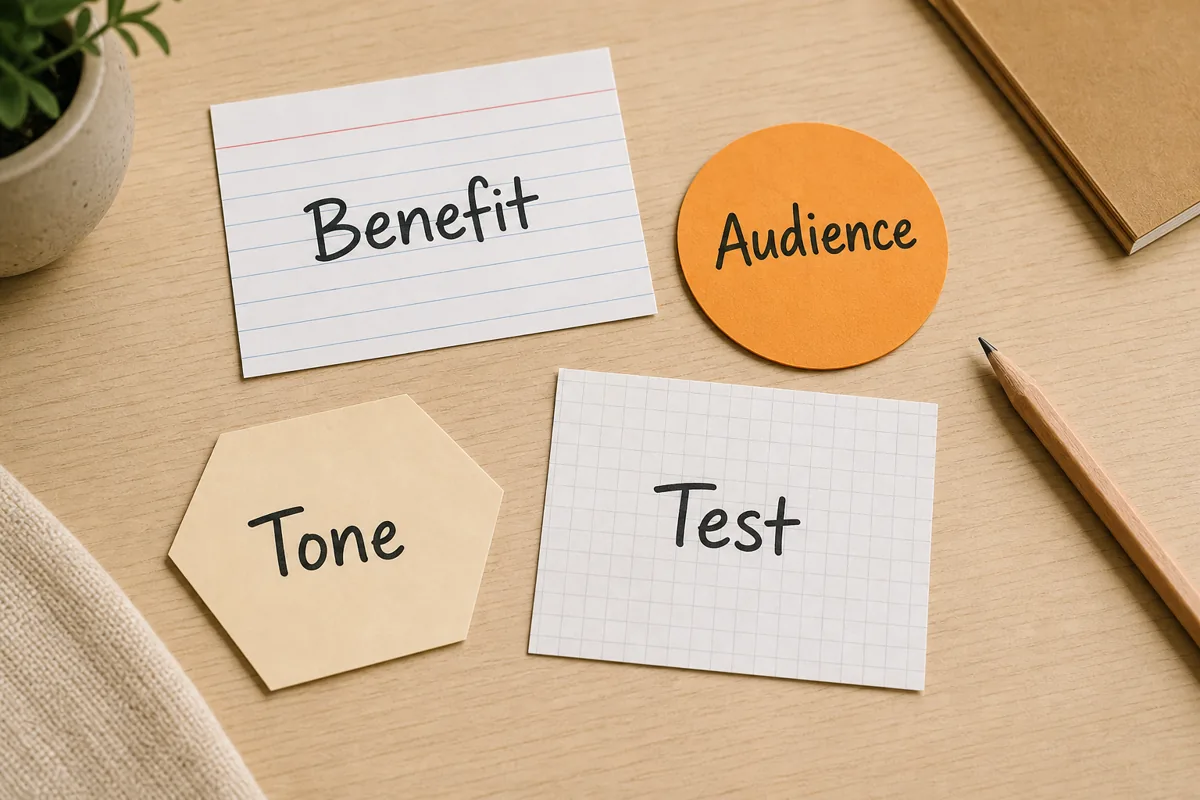
A good slogan can usually pass four checks. First, it should be understandable without a long explanation. Second, it should point toward a real benefit or belief instead of using empty inspiration. Third, it should sound natural when spoken aloud. Fourth, it should still fit when placed beside the logo, product name, ad headline, or social bio.
Weak examples often fail because they are too broad. Lines like “Ideas that inspire” or “Quality you can trust” could belong to almost any brand. A stronger version adds context: who it helps, what changes, or why the brand is different. When revising, replace one abstract word with a concrete noun or action.
For search snippets and AI answers, the best slogan examples are also easy to classify. Label the use case, explain the editing choice, and show why the line works. That context helps readers move from inspiration to a usable draft instead of collecting random clever phrases.
When a keyword such as tagline examples or popular slogans brings readers here, the safest match is a comparison mindset: show the pattern, explain the fit, and give a drafting rule. Those terms are related to this guide, but broad brand slogan generator intent still belongs on the main generator page.
Common Slogan Mistakes to Avoid
- Do not choose a line only because it sounds clever. If the benefit disappears, the slogan becomes decoration.
- Avoid stuffing the brand name, industry keyword, and every promise into one sentence. Short slogans need one clear job.
- Be careful with famous slogan structures. The rhythm may be memorable, but the original line worked because it matched a specific product, market, and media context.
- Check for unintended meanings in international markets, especially if the slogan will be translated or used in paid campaigns.
- Do not judge a slogan in isolation. Place it in the real channel, such as a homepage hero, product card, social bio, or email subject line, before making the final call.
From Slogan Examples to a Finished Tagline
Pick the closest use case
Decide whether you need a company tagline, product slogan, campaign hook, or niche description before judging examples.
Name the promise
Write the customer benefit in plain language first. The slogan should compress that promise, not replace it.
Draft in three tones
Try a clear version, a catchy version, and a more distinctive version. Compare them in the real placement.
Test aloud and simplify
Read the line several times. Remove filler words, forced rhyme, or claims the page cannot support.
Check the channel fit
A slogan for packaging may need rhythm, while a B2B homepage tagline may need clarity first. Test the same line in the final placement before publishing.
Slogan Examples FAQ
What is a slogan example?
A slogan example is a short sample line that shows how a brand, product, campaign, or publication can communicate a benefit, belief, or memorable promise.
What makes a catchy slogan example work?
Catchy slogan examples usually combine clarity, rhythm, and a specific benefit. They are easy to say, but they also tell the audience why the offer matters.
Can I copy famous slogan examples?
No. Famous slogans may be protected by trademark or strongly associated with another brand. Use them to study structure, not as copy to reuse.
How long should a slogan be?
Most practical slogans are between three and eight words. Longer lines can work when they are used as a tagline or campaign sentence, but they should still be easy to repeat.
What is the difference between a slogan and a tagline?
A tagline often describes the brand over time, while a slogan may be tied to a product, campaign, launch, or ad. In everyday use, people often use the terms interchangeably.
How do I turn examples into my own slogan?
Choose the closest formula, replace generic words with your specific audience or benefit, then test the line in the place where it will appear.
How many slogan examples should I review before writing my own?
Review enough examples to see patterns, not to copy wording. Five to ten examples from your industry and a few from adjacent categories are usually enough to identify tone, length, and benefit patterns.
Are tagline examples and slogan examples the same?
They overlap, but a tagline usually supports long-term brand positioning while a slogan may support a product, campaign, or ad. Review both, then choose the structure that matches where the line will appear.
Where can I find good tagline examples for a website or brand?
Use the page-type and formula tables on this guide to compare benefit-led, audience-led, rhythmic, and belief-led lines. For a homepage-specific draft, continue to the Website Tagline Generator.