How to Make a Slogan: 5 Practical Steps
Turn a plain business promise into a short, memorable line with a repeatable process—then test it before you put it on a website, ad, or package.
The quick answer: how to make a slogan that works
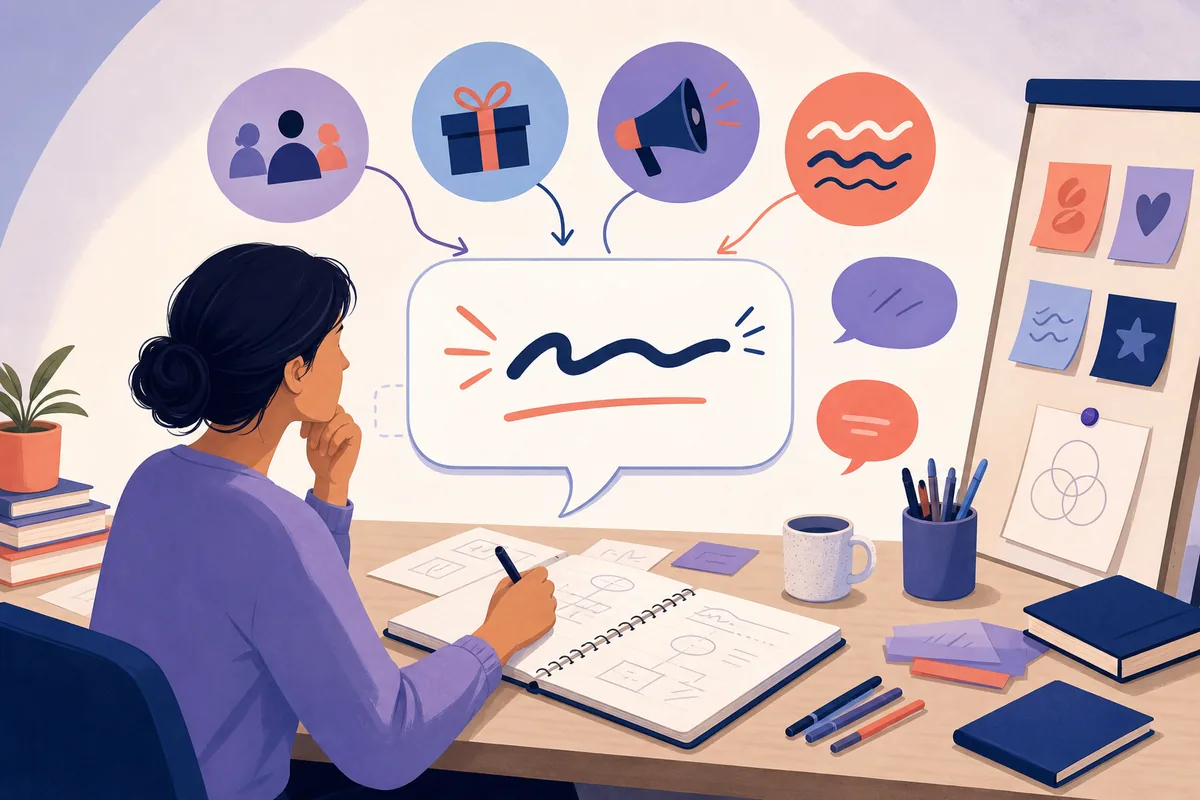
To make a slogan, first write one clear sentence that explains who you help, what result you deliver, and why your approach is different. Pull out the strongest benefit and the most specific words. Draft at least 20 short lines, explore a few structures, and cut every word that does not improve meaning, sound, or memory. Then test the finalists in the real place where the slogan will appear.
A good slogan is not simply a clever phrase. It is compressed positioning: a small line that helps the right audience understand or remember a useful promise. Some strong slogans are two or three words; others need six or eight. Shortness helps, but clarity and fit matter more than chasing an arbitrary word count.
This guide separates the writing job from the generator job. Use the method below to decide what your slogan should communicate. Use the free AI slogan generator to produce variations, not to choose your business strategy for you. The final decision still needs human judgment, audience feedback, and a basic trademark search.
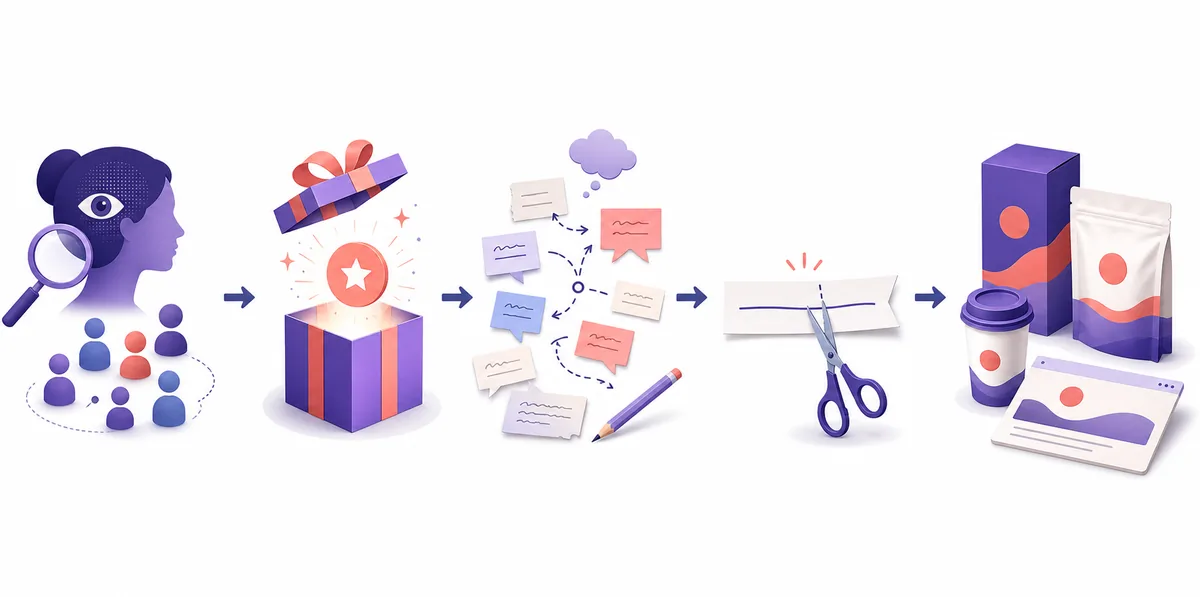
How to create a slogan in five steps
Set aside 30 to 45 minutes for the first pass. The goal is not one perfect line on the first try; it is a strong brief, a wide draft list, and a defensible shortlist.
Define the audience and job
Name one audience and one moment. A homepage tagline may need to explain the offer, while an ad slogan may need to create curiosity or reinforce a campaign. Write: ‘For [audience], this line should make [idea or action] easy to remember.’ A slogan with one clear job is easier to judge.
Write the promise in plain language
Before trying rhyme or wordplay, finish this sentence: ‘We help [audience] get [result] by [difference].’ Keep claims accurate. If your promise could belong to any competitor, make the benefit, method, or customer more specific. This plain sentence is the source material for every draft.
Generate at least 20 directions
Draft quickly without polishing each line. Try benefit-first, contrast, action, audience, belief, and rhythmic versions. Change nouns and verbs before adding adjectives. Twenty directions expose repeated clichés and give you enough range to compare clear ideas with more distinctive ones.
Cut, sharpen, and read aloud
Remove filler such as ‘innovative solutions’ when it adds no proof. Prefer concrete verbs and familiar words. Read each line at normal speaking speed. Keep the versions that sound natural, survive without an explanation, and still connect to the product or brand. Forced rhyme is usually less memorable than clear rhythm.
Test the shortlist in context
Place three to five finalists beside the logo, in a homepage hero, on a mobile ad, or on packaging. Ask people what they think the business offers and what they remember after a few minutes. Search exact phrases and review trademark availability before adopting a line for a major campaign.
Six slogan formulas to start your draft
A formula is a constraint, not finished copy. Replace every bracket with real customer language, then rewrite until the line sounds like your brand rather than a template.
| Formula | When it helps | Drafting example |
|---|---|---|
| Benefit + moment | Services, apps, local businesses | Clear books, every Friday |
| Less pain + more gain | SaaS, productivity, operations | Less admin. More action. |
| Verb + desired result | Fitness, education, campaigns | Build stronger habits |
| Audience + advantage | Niche products and B2B offers | Fast invoices for small teams |
| Belief + proof cue | Mission-led and premium brands | Made slowly. Built to last. |
| Sound pattern + meaning | Food, events, retail, audio ads | Fresh fare, made with care |
Worked slogan examples: from weak to useful
The revision matters more than the finished line. Each example adds an audience, benefit, contrast, or concrete image instead of merely making the wording louder.
| Brief | Weak first draft | Stronger direction | What changed |
|---|---|---|---|
| Bookkeeping for freelancers | Smart finance solutions | Close the books. Keep the weekend. | Replaces a vague claim with a familiar outcome and moment. |
| Neighborhood bakery | Quality you can taste | Warm bread before work | Uses a concrete product, time, and customer routine. |
| Team planning software | Work better together | Fewer status meetings. Clearer Mondays. | Names the friction removed and the improved experience. |
| Refillable skincare | Beauty for a better world | Refill the bottle, not the bin | Turns a broad value into a visible action and contrast. |
| Tutoring for nervous students | Unlock your potential | Calm practice. Confident answers. | Makes the emotional before-and-after specific. |
| Local bicycle repair | We keep you moving | Fixed today. Riding tonight. | Adds speed, timing, and a believable use-case outcome. |
How to tell whether your slogan is good
Score each finalist from one to five on clarity, relevance, distinctiveness, sound, and channel fit. Do not total the scores too early. A line that is highly distinctive but impossible to understand still needs work, while a clear line that sounds like every competitor needs a sharper proof point.
Run two simple tests. First, show the line without the logo and ask what kind of company it might represent. Second, show it in the intended layout for five seconds, hide it, and ask what people remember. You are looking for the right idea, not perfect word-for-word recall. Feedback from actual prospects is more useful than approval from people who already know the brief.
AI can help create more variations around a locked promise, compare tones, or remove filler. Give it the audience, main benefit, evidence, banned clichés, preferred tone, and maximum length. Reject outputs that invent capabilities or resemble famous brand lines.
- Clarity: a new reader can explain the central idea without extra context.
- Relevance: the line belongs to this offer and this audience, not any company.
- Distinctiveness: at least one word, image, contrast, or point of view is ownable.
- Sound: the phrase is easy to say, hear, and repeat without forced rhyme.
- Channel fit: it remains legible and meaningful on the smallest important placement.
- Credibility: the business can consistently deliver the promise implied by the line.
Common slogan mistakes to avoid
- Starting with wordplay before deciding what the audience should remember.
- Using abstract filler such as excellence, innovation, quality, or solutions without a concrete benefit.
- Copying the rhythm or structure of a famous slogan so closely that the new line feels borrowed.
- Trying to include the company name, category, audience, every feature, and a call to action in one phrase.
- Choosing a line only in a document instead of testing it beside the logo and in real layouts.
- Treating AI output as legally cleared or strategically correct without an exact-phrase and trademark review.
- Translating a slogan word for word for another market instead of recreating its promise, tone, and sound locally.
How to Make a Slogan FAQ
How do I make a slogan for my business?
Write your audience, main benefit, and difference in one plain sentence. Generate at least 20 short directions, edit the strongest five, test them in the real channel, and check exact phrases before choosing one.
How long should a slogan be?
Many useful slogans are three to eight words, but there is no universal limit. Use the fewest words that preserve clarity, tone, and the important promise.
What makes a good slogan?
A good slogan is clear, relevant, memorable, easy to say, credible, and appropriate for its placement. It should make the right idea easier to remember rather than merely sounding clever.
Should a slogan rhyme?
Only when the rhyme sounds natural and supports the meaning. Rhythm, repetition, and alliteration can improve recall without forcing end rhymes.
What is the difference between a slogan and a tagline?
A tagline often expresses long-term brand positioning, while a slogan may support a campaign, product, or launch. People commonly use the terms interchangeably, so define the line's job before writing it.
Can I use an AI-generated slogan?
You can use AI to brainstorm and refine options, but review every claim, test the line with people, search the exact phrase, and obtain appropriate trademark advice before a high-value commercial launch.
How many slogan ideas should I write?
Twenty is a useful first target. It is enough to move beyond obvious clichés while remaining practical to review. Larger campaigns may explore dozens or hundreds of variations.