Logo Tagline: What It Is, How to Write One, and Examples
A practical guide to pairing a logo with a short, memorable line that clarifies the brand promise without making the lockup hard to read.
Start with the brand promise, not decoration
A logo tagline is a short line of copy that sits with, beneath, or near a logo to explain a brand promise, audience, point of view, or useful benefit. The logo creates recognition; the tagline adds meaning. A strong logo and tagline combination helps a new visitor understand the brand faster, but it should never force the mark to carry a paragraph of explanation.
The best logo tagline is specific enough to belong to one brand and short enough to work in the real places where people see it: a website header, social profile, package, slide deck, storefront, or mobile screen. Start with the customer and the outcome, then choose a line that remains clear when the logo is small and the surrounding context is limited.
This guide covers the difference between a logo and a tagline, original examples, reusable writing formulas, placement decisions, and a simple review workflow. Use the examples as patterns rather than copy. Before commercial use, search the exact phrase and get appropriate trademark advice for the markets that matter to your business.
Logo and Tagline Examples by Brand Job
These original examples show how the line can add audience, benefit, context, or personality without repeating the logo name.
| Brand job | Original logo tagline example | Why it works | Placement note |
|---|---|---|---|
| Local bakery | Warm bread before work | Names a concrete product and a familiar customer moment. | Works under a storefront mark, menu, or local homepage hero. |
| B2B workflow tool | Fewer handoffs. Clearer Mondays. | Turns a vague efficiency claim into a recognizable before-and-after. | Use beside the logo on a website; keep the line visible at tablet width. |
| Outdoor apparel | Go farther, pack lighter | Pairs an action with a practical benefit that fits the category. | Keep enough space around the lockup for labels and product photography. |
| Independent publisher | Good questions for busy minds | Identifies the editorial value and a broad but clear reader type. | A horizontal lockup suits a site header, newsletter, or podcast cover. |
| Community fitness studio | Stronger habits, together | Combines a believable outcome with a sense of belonging. | A stacked version can work on posters when the logo remains simple. |
| Refillable home goods | Refill the bottle, not the bin | Uses contrast to make the sustainability action easy to remember. | Test contrast and line length before using it on a small package. |
Six Logo Tagline Formulas to Try
A formula is a drafting constraint, not finished brand copy. Replace generic words with a real audience, benefit, proof point, or moment.
| Formula | Best for | Drafting prompt |
|---|---|---|
| Audience + outcome | B2B, education, coaching | Who is this for, and what becomes easier or better for them? |
| Action + benefit | Products, services, apps | What useful action does the brand help people take? |
| Pain removed + result | Software and operations | Which frustrating state does the offer replace? |
| Point of view + proof cue | Mission-led and premium brands | What does the brand believe, and what visible behavior supports it? |
| Category + difference | New or unfamiliar offers | What do you provide, and what makes the approach recognizably different? |
| Moment + feeling | Food, retail, lifestyle | When does the customer experience the benefit, and how should it feel? |
What Makes a Logo Tagline Strong?
A useful line passes a clarity test before it passes a cleverness test. A person who sees the logo without the full sales page should be able to form a reasonable idea of the category, audience, benefit, or attitude. The tagline does not need to explain everything, but it should give the viewer a useful direction rather than a generic promise such as ‘ideas that inspire.’
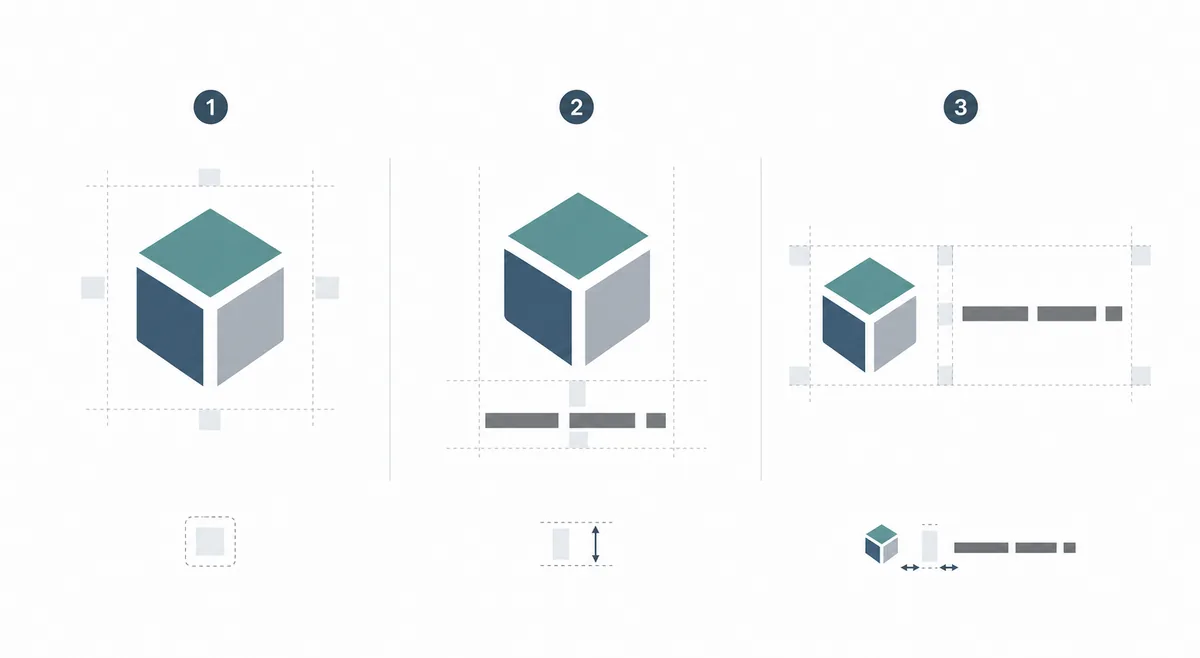
The logo and tagline also need visual hierarchy. The mark should remain recognizable, the line should be easy to scan, and the spacing should prevent the tagline from looking like a legal disclaimer or a second logo. Try horizontal and stacked lockups, then check the smallest important use: a mobile header, profile avatar area, package label, favicon-adjacent header, or presentation footer.
Finally, judge the line in context. Read it aloud, remove the logo, show it to someone unfamiliar with the brief, and ask what they think the business does. Search the exact phrase before launch. A line that sounds familiar may already be strongly associated with another brand, even when the words seem ordinary.
Common Logo Tagline Mistakes
- Writing a broad inspirational sentence that could belong to almost any company.
- Repeating the company name or category without adding a benefit, audience, or point of view.
- Making the tagline so long that it becomes unreadable when the logo is used at a practical size.
- Using forced rhyme, alliteration, or wordplay before deciding what the audience should remember.
- Treating the tagline as permanent in every context instead of creating responsive or simplified lockups.
- Copying the rhythm or wording of a famous brand line because it feels instantly recognizable.
- Assuming an AI-generated line is legally clear or strategically correct without human review and an exact-phrase search.
A Five-Step Logo Tagline Workflow
Define the job of the line
Decide whether the tagline should explain the category, state a benefit, express a belief, support a campaign, or help a new visitor remember the brand. One primary job keeps the wording focused.
Write the promise in plain language
Complete this sentence: ‘We help [audience] get [result] by [difference].’ Keep the raw sentence specific. It becomes the source material for shorter lines rather than a phrase to paste under the logo.
Draft 20 short directions
Explore benefit, audience, contrast, action, belief, and moment-based versions. Generate breadth first, then remove clichés and lines that need a long explanation.
Build two or three lockups
Test logo alone, logo with tagline, and a compact wordmark or stacked version. Check hierarchy, contrast, clear space, and readability at the smallest important placement.
Test meaning and clearance
Show the line without the logo, ask what people remember, search the exact phrase, and review trademark guidance before using it in a high-value commercial launch.
Logo Tagline FAQ
What is a tagline in a logo?
A logo tagline is a short line placed with or near a logo to communicate a brand promise, audience, benefit, or point of view. It adds meaning to the mark but should not replace clear brand positioning elsewhere.
What is the difference between a logo and a tagline?
A logo is the visual identity mark; a tagline is a short verbal message. The logo helps people recognize the brand, while the tagline helps them understand or remember what the brand stands for.
Should every logo have a tagline?
No. A tagline is useful when it adds clarity, distinction, or a memorable promise. If it makes a small logo unreadable or repeats information people already know, use the logo alone in that context.
How long should a logo tagline be?
Many practical taglines are three to eight words, but the right length depends on the idea and the smallest placement. Keep the fewest words that preserve clarity, tone, and credibility.
Where should a tagline go with a logo?
Common options include below the mark, beside a wordmark, or in a stacked lockup. Test the option that keeps the logo recognizable, the line readable, and the spacing balanced on both desktop and mobile layouts.
Can a logo tagline change for different campaigns?
Yes. A brand can keep a durable positioning line while using shorter campaign slogans in specific launches. Create clear rules so temporary copy does not look like the permanent brand tagline.
Can I copy a famous logo tagline as inspiration?
Study famous lines for structure, not wording. Search the exact phrase and get appropriate legal advice before adopting a line, especially when it will appear on products, packaging, or paid advertising.